
Looking Ahead to 2026: Strengthening Our Sanctuary Community
As we begin a new year, I want to share how energized and optimistic the GFAS staff and Board are about what lies ahead in 2026. Most of all, we are looking forward to continuing and deepening our work alongside our friends and colleagues at GFAS-certified sanctuaries around the world. Your dedication to animals, to ethical care, and to the highest standards of sanctuary operations continues to inspire everything we do.
In the coming year, GFAS will be rolling out several offerings and benefits designed to support sanctuaries in practical, meaningful ways. We are proud to continue the Carole Noon and Outstanding Sanctuary Awards, which recognize excellence and leadership across our accredited network. In October, these awards will once again be accompanied by a full week of expert-led webinars and workshops, offering timely, relevant content on topics ranging from animal care best practices to fundraising strategies and organizational sustainability.
We are also excited to host the 2026 Giving Day for Apes, a collaborative campaign that raises critical funds and awareness for sanctuaries and rescue centers caring for apes. In addition, we will bring back our popular Roundtable Discussions – interactive, peer-driven sessions that provide space for honest conversation, shared problem-solving, and the exchange of innovative ideas. By reconnecting in this way, we aim to foster an even stronger and more united sanctuary community.
Building on momentum from 2025, GFAS will continue expanding our program to secure in-kind donations of pharmaceuticals and other essential supplies for equine and farmed animal sanctuaries. After piloting this effort last year and distributing more than $750,000 in donated product, we are eager to grow its reach and impact. We’re also pleased to offer accredited sanctuaries access to exclusive discounts on animal health supplies and mini–microchips at sanctuary pricing through our partnership with Revival Animal Health. Please watch your email for details on how to sign-up for both offerings, later this month.
We also hope to see many of you in person throughout the year. GFAS staff plan to attend events including The Right Horse Summit, the Animals and Vegan Advocacy Summit, the Homes for Horses Conference, and more. If you’ll be at any of these gatherings, we would love the opportunity to connect.
Thank you for all that you do. We are honored to walk into 2026 alongside you.
Valerie Taylor, Executive Director
Leadership Story: Ryan Bulzan, Farm of the Free Animal Sanctuary
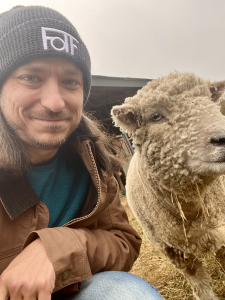
I have learned that people do not come to sanctuary work because they have the perfect background for it. Many arrive because something opened their heart in an unexpected way, and that was certainly true for me.
I did not grow up with a natural empathy for farmed animals. My grandfather taught me to fish, a hobby I enjoyed well into my twenties. Hunting was normal, and several of my relatives were involved in 4-H. I also have extended family who are practicing Amish, where animals are viewed in a strictly utilitarian way. Animals were always around me, but not in a context that encouraged emotional connection. I never imagined I would one day help lead a sanctuary.
Then I visited a farm animal sanctuary, and everything changed.
For the first time, I saw cows, goats, and pigs simply living peacefully. They were not stressed or afraid. They were safe, relaxed, and completely themselves. In that moment, something clicked for me. These animals had personalities. They had preferences, quirks, and ways of interacting with the world that were entirely their own. They were individuals, not interchangeable beings like I had assumed when I was growing up.
Seeing them clearly in that way opened something inside me. I felt empathy I did not know was there. Just as powerfully, I felt that the way we treat billions of these animals is a grave injustice, one I could no longer ignore. That realization shifted the entire trajectory of my life.
The lesson I return to is this: change often begins with a single moment of truly seeing another being. Sanctuaries create those moments every day, for animals and for people like me who never expected to find themselves here.
Ryan Bulzan
Executive Director (he/him/his)
Farm of the Free Animal Sanctuary
Veganuary: For Yourself, For Your Sanctuary
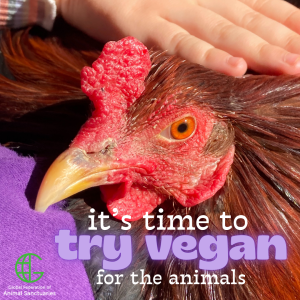
If you get our newsletter, we’re willing to bet you’re an animal lover. You care deeply that animals have a safe, stable place to live in an environment that respects and honors them as individuals. For that same reason, you may be curious about a vegan lifestyle, especially at the New Year as you reflect on the year ahead. Veganism is a lifestyle that abstains from consumption of animal products (for food, cosmetics, clothing, etc) as a way to reduce harm to animals. For most animal lovers or animal-loving organizations, this lifestyle is a way to align your deep-held beliefs with your actions and reduce profit for harmful animal industries.
When it comes to organizations, we expect that farmed animal sanctuaries hold a vegan ethic – out of respect for their own residents and consistency with their mission. After all, supporting the very industries that necessitate farmed animal rescue would be counterproductive. But you may be surprised to learn that we advocate ALL kinds of animal sanctuaries consider a vegan organizational policy – in fact, it’s a preferred practice in the GFAS Standards. Because even if your organization doesn’t work with these particular species, as an organization that works to protect animals, it makes good sense to extend that compassion consistently to all species as models of how we want animals to be treated and considered.
That being said, change is hard, whether personal or organizational. So, we have some wonderful resources to help!
For a fun personal challenge to try vegan: https://veganuary.com/try-vegan/
Veganuary creates a community of folks trying veganism out and provides recipes, tips and more to help you try this out!
For organizational change: https://animalplace.org/food-for-thought/
Accredited Animal Place, CA has a wonderful program that helps organizations draft and adopt vegan organizational policies. They provide sample language and all.
We hope that you’ll consider leaving animals off your plate this year – they’re our friends, not food.
New Offering: Exclusive Savings & Supplies for GFAS Sanctuaries
 We know how much heart, effort, and resources it takes to give animals in your care the second chance they deserve. That’s why the Global Federation of Animal Sanctuaries is excited to share a valuable opportunity exclusively for sanctuaries and rescue centers.
Revival Animal Health’s Shelter/Rescue Program is designed to make your mission more sustainable. This program offers:
- Exclusive discounts on animal health supplies
- Mini – Microchips at Sanctuary discounts
- Dedicated support from product experts who understand shelter and sanctuary needs
- Access to trusted brands, including Creative Science
As the preferred distributor of Creative Science, Revival Animal Health provides high-quality products used in animal care settings nationwide—at prices that help your budget stretch further.
Whether you’re caring for wildlife, farmed animals, or equines, Revival’s team is here to support your efforts with compassion, reliability, and a deep respect for your work.
👉 Learn more and apply today:
https://www.revivalanimal.com/shelter-rescue
Or Call 800-786-4751 (and select prompt 3). When you are asked who referred you, please mention GFAS.
Thank you for all that you do to provide safe, dignified lives for animals in need.
Good Legislative News to Start 2026!
 Our friends at GFAS Accredited, IAR Costa Rica, have long been fighting to save local wildlife from powerline electrocution. The situation is so bad that electrocutions have become the main factor driving their rescues with over two-thirds of howler monkey related incidents a direct result of electrocution.
After years of campaigning on the issue, IAR Costa Rica’s program director, Gaby Campos, met with Congresswoman Cynthia Córdoba and inspired her to take action. Bill 25.248 – The Sustainable and Biodiverse Electric Infrastructure Law – has now been presented to the Legislative Assembly. The bill seeks to ensure that measures designed to prevent electrocutions become legally binding rather than a guideline.
Thank you, IAR Costa Rica, and Congresswoman Córdoba, for your tireless efforts to protect Costa Rican wildlife!
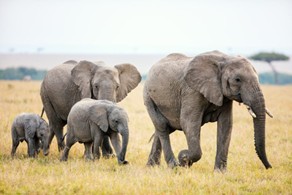 We are hoping 2026 will be the year Canada passes Bill S-15, a bill brought by Senator Marty Klyne, that will phase out the captivity of elephants and great apes across the country. If passed into law, it would end the acquisition, breeding, and use of these species in entertainment (with exemptions for genuine conservation efforts or animal rescues). Canada became a leader in animal welfare policy when they banned the confinement of whales and dolphins. Let’s keep this momentum going!
Written by: Non-Profit Books
Animal sanctuaries exist because of compassion. But sustaining that compassion over years — and often decades — requires financial clarity. January is when many Executive Directors and Founders step back to evaluate the year behind them and set priorities for the year ahead. One critical question often goes unanswered: Do we truly understand what it costs to care for each animal?
Most sanctuaries unintentionally underestimate cost of care. Direct expenses like feed, bedding, and veterinary services are easy to track. What often gets overlooked are the less visible but equally essential costs: utilities, insurance, facility maintenance, software systems, professional services, compliance, and administrative time. Volunteer support, while invaluable, can also mask the true labor cost required to sustain operations long-term. Add inflation and aging animal populations into the mix, and yesterday’s assumptions quietly become today’s financial pressure points.
Underestimating true cost creates real risk. It contributes to tight cash flow, reactive fundraising, delayed maintenance, staff burnout, and difficult decisions during emergencies. Many nonprofits aim to maintain at least three months of operating reserves, yet smaller organizations frequently operate well below that threshold. In a sanctuary environment where unexpected medical needs are inevitable, thin margins can quickly become mission stress.
Understanding true cost of care transforms financial management into leadership strategy — and it becomes a powerful foundation for goal setting.
For example:
- Capacity goals: Based on actual cost per animal, how many new rescues can be responsibly supported this year without compromising care?
- Funding goals: What level of unrestricted funding is needed to sustainably support current animals?
- Reserve goals: Can the organization intentionally strengthen cash reserves to improve stability and emergency readiness?
- Operational goals: Where could better systems or reporting free up staff time and reduce administrative friction?
These goals don’t limit compassion — they protect it. When leaders understand their full financial picture, decisions become proactive instead of reactive. Just as importantly, cost clarity strengthens transparency with boards, donors, and grant funders, reinforcing trust and credibility.
At Non-Profit Books, we help animal sanctuaries with Accounting, Bookkeeping, Payroll, and Taxes. And because we believe in the incredible work GFAS members do every day, we’re offering an exclusive 20% discount on services for GFAS sanctuaries. Whether you need year-end cleanup or ongoing bookkeeping, we’ve got your back (and your balance sheet).
👉 Ready to make this your smoothest year-end yet? Schedule a free consultation or reach out with questions at . You can also learn more and contact us directly through our website.
Certifications and Renewals
Over the past month GFAS has certified four new groups and renewed four!
Congratulations to all these groups!
New Certifications
Caribbean Thoroughbred Aftercare, Puerto Rico
Happy Trails Horse Rescue, Oregon
Horses’ Haven, Michigan
The Merrymac Farm Sanctuary, Vermont
Renewals
Bat World, Texas
Center for Great Apes, Florida
Colorado Therapeutic Riding Center, Colorado
Roanchar Ranch Rescue, New York